Luxury Home Plan Designs: Why Home Automation Planning Belongs on the Floor Plan
Luxury home plan designs are often judged by their layouts, proportions, and finishes—but what truly defines how a home lives is decided long before construction begins. The floor plan isn’t just a drawing of rooms and walls; it’s the foundation where lighting, climate, access, and daily behavior should already be accounted for.
In modern custom homes, home automation is no longer something to “add later.” When home automation planning is delayed until after architectural decisions are locked in, systems are forced to adapt to the building instead of working with it. The result is more switches, more compromises, and technology that feels layered on rather than integrated.
Designing home automation at the floor plan stage changes that outcome. It allows lighting to follow how spaces are used, climate to respond naturally by room and zone, and control points to be placed intentionally—or reduced altogether. Instead of hard-wiring assumptions, behavior is designed first, and technology quietly supports it.
This is why luxury home plan designs that truly age well treat home automation planning as part of the architectural process itself. When systems are considered alongside structure, flow, and function, the home becomes simpler to live in, easier to maintain, and far more adaptable over time.

What Luxury Home Plan Designs Really Include Today
Luxury home plan designs have evolved far beyond arranging rooms and selecting finishes. While square footage, materials, and visual impact still matter, modern house designs are increasingly defined by how intelligently the home functions day to day. A well-designed home today considers not only where spaces exist, but how those spaces are experienced over time.
In new homes design, true luxury comes from coordination. Lighting, climate, shading, access, and energy systems are no longer independent layers added after construction. They are part of the building design itself, influencing wall layouts, ceiling details, electrical planning, and how rooms transition from one use to another throughout the day.
This shift reflects a broader understanding of what “planning” really means. Floor plans are no longer static drawings; they are strategic tools that account for movement, comfort, and behavior. When home automation is considered early, the design can support fewer switches, cleaner walls, and spaces that respond naturally to occupancy and daylight instead of relying on constant manual control.
As a result, luxury home plan designs today are measured less by how impressive they look on paper and more by how effortlessly the home operates once it’s built. Intelligent function has become as essential as form, and automation planning is now a foundational part of modern residential design.
Floor Plans Are More Than Layouts — They’re System Blueprints
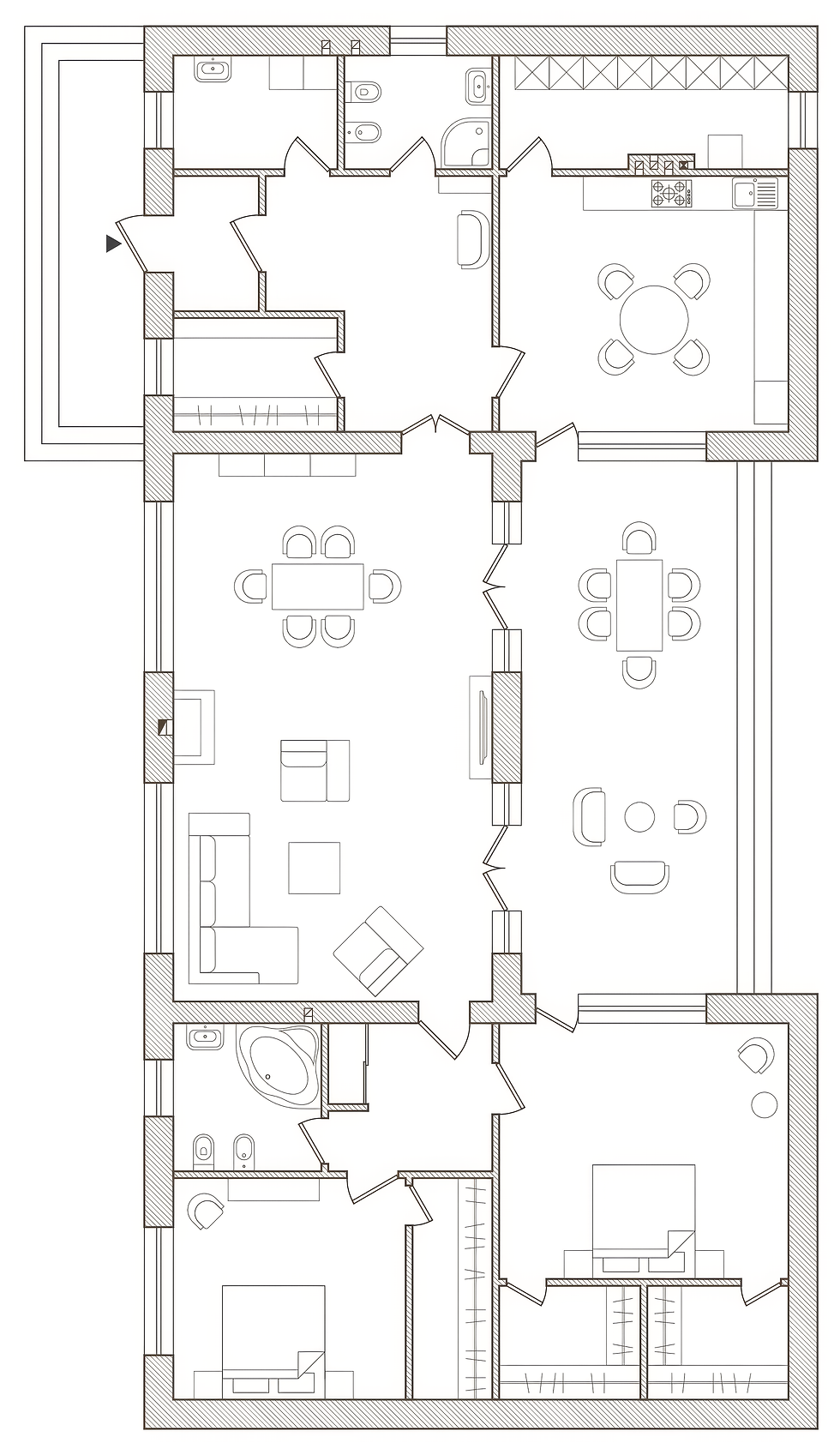
Home design plans are often viewed as visual guides—showing room sizes, circulation, and structural relationships. In reality, especially for custom home design plans, the floor plan is also a coordination document. It sets the stage for how lighting, climate, access, and other home technology systems will be integrated into the home.
For an architectural designer or house designer, every wall, ceiling, and transition has technical consequences. Where doors are placed affects access control. Ceiling heights influence lighting strategy. Room adjacencies determine climate zoning and sound behavior. These decisions are not purely aesthetic—they shape how systems must function within the space.
A floor plan designer working on a luxury home is effectively creating a system blueprint, whether it’s acknowledged or not. When systems are considered early, control points can be reduced, wiring paths can be planned cleanly, and home automation logic can follow the natural flow of the home instead of fighting it later.
This is why home automation planning belongs at the same stage as layout development. Treating the floor plan as a system blueprint allows technology to align with architecture, ensuring that lighting, comfort, and access feel intentional rather than improvised after construction is already underway.
Why Home Automation Planning Must Happen Before Construction
Home automation plans and design are most effective when they begin before construction, not after walls are framed and finishes are selected. Once a building moves from drawings to physical structure, options narrow quickly. Wiring paths are fixed, switch locations are locked in, and system behavior is forced to adapt to decisions that were never intended to support automation in the first place.
Planning automation early changes the cost equation. Instead of reacting to limitations, systems can be designed intentionally—reducing redundant wiring, avoiding unnecessary devices, and minimizing future rework. What might require demolition or redesign later can often be handled through logic and planning when automation is considered at the floor plan stage.
This is where design documentation for a home automation project becomes critical. Clear plans define how lighting, climate, access, and home control systems should interact, not just where components are installed. Documentation allows builders, electricians, and integrators to work from a shared blueprint, reducing miscommunication and ensuring the system is implemented as intended.
A home automation consultant plays a key role in this phase by translating lifestyle goals and architectural intent into system logic. Rather than focusing on individual products, the emphasis is on how home technology should behave within the space. The result is a home automation technology strategy that remains flexible, serviceable, and relevant long after construction is complete—because the behavior was designed before the walls went up.
Designing Behavior, Not Just Home Technology
Home automation technology delivers its real value when it is designed around behavior rather than devices. Too often, technology decisions are driven by products—what switch, what thermostat, what app—without first defining how spaces are actually used. In well-designed homes, behavior leads and home technology follows.
Every room has a rhythm. Spaces are occupied at different times of day, respond differently to daylight, and serve multiple purposes over time. Designing behavior means accounting for presence, ambient light, and daily routines so lighting, climate, and comfort adjust naturally without requiring constant interaction. Instead of pressing buttons to create comfort, the home responds on its own.
This approach aligns closely with building design. Architecture already guides how people move, gather, and rest within a space. Home automation logic should reinforce those patterns, not compete with them. When behavior is defined early, control points can be simplified, systems become more intuitive, and the home feels calmer rather than more complex.
A home automation consultant helps bridge this gap by focusing on how technology should behave within the architectural framework. The goal is not to add more devices, but to design home systems that quietly support daily life—allowing home technology to enhance how spaces are used without dictating how people live.
How Home Automation Impacts Lighting, Climate, and Daily Living
When home automation technology is planned early, its impact is felt in the small, everyday moments that define comfort. Lighting adjusts as spaces become occupied, responds to available daylight, and transitions smoothly from day to night without requiring constant input. In modern house designs, this kind of behavior allows rooms to feel intentional and calm rather than overcontrolled.
Climate benefits in similar ways. Instead of relying on a single thermostat or rigid schedules, rooms can be zoned to reflect how they are actually used. Temperature and airflow adapt to occupancy, time of day, and changing conditions, creating a more consistent and comfortable environment throughout the home. In new home design, this coordination reduces energy waste while improving day-to-day comfort.
These outcomes are not the result of adding more devices, but of designing how systems work together. When lighting and climate are coordinated through home automation logic, daily routines become simpler. Fewer switches are needed, fewer adjustments are required, and the home supports occupants without drawing attention to the technology behind it.
This is where home automation planning begins to influence physical design choices. Decisions about lighting layers, switch placement, and control strategies are informed by how the home is meant to behave. By the time fixtures and switches are selected, the system logic is already defined—setting the stage for cleaner walls, simpler interaction, and spaces that feel effortless to live in.
Integrating Home Automation Into Architectural Documentation
Design documentation for a home automation project is what transforms ideas into a system that can be built, serviced, and understood long after installation. Without clear documentation, automation exists only in the installer’s memory or inside software that may change over time. When automation is documented properly, it becomes part of the building design itself.
Home automation plans and design should live alongside architectural drawings, electrical plans, and mechanical schedules. These documents define system intent—how lighting, climate, access, and control are meant to behave—not just where devices are installed. Including automation in the documentation phase ensures that builders and electricians understand how systems interact and where flexibility is required.
Providing both digital and hard-copy documentation adds long-term value. Digital plans support updates, revisions, and remote support, while physical copies ensure the system can be serviced even if internet access is unavailable or software platforms change. Years later, a technician can open a panel or closet and immediately understand how the system was designed and wired, rather than reverse-engineering it.
This level of documentation improves serviceability and protects the investment over time. It also supports resale by clearly demonstrating that the home’s automation was professionally planned, not pieced together. For future owners, builders, and service professionals, well-documented automation turns complexity into clarity—and makes the system a lasting part of the home’s design.
Choosing the Right Home Automation Platform During the Design Phase
Selecting a home automation platform during the design phase is not about choosing products—it’s about choosing a system architecture. The platform influences how wiring is planned, how rooms are zoned, how logic is programmed, and how adaptable the system will be over time. This is why platform decisions belong on the floor plan, not after construction.
Two platforms often considered at this stage are Loxone and Crestron Home. Both are capable, highly customizable automation systems used in high-end residential and commercial projects. The difference is not whether they can automate—but how that automation is achieved, maintained, and evolved.
Two Architectures, Two Approaches
Loxone is built as a software-driven automation platform. A large portion of its functionality—logic, behavior, integrations, and system expansion—is handled in software rather than through additional hardware or licenses. This architecture allows automation behavior to be designed, adjusted, and expanded without fundamentally changing the physical infrastructure. Because logic is centralized and largely software-based, Loxone systems are especially adaptable over time and well suited to long-term evolution.
Crestron Home is built around a hardware- and processor-centric architecture. It is exceptionally powerful and highly customizable, particularly in complex environments where audio/video, lighting, and third-party systems must be tightly integrated. Programming and customization are extensive, but they are typically handled through certified professionals, and system changes often involve deeper interaction with hardware configuration and licensed software environments.
Both platforms operate locally and can support advanced automation logic. Both can use interfaces, touch panels, keypads, and mobile apps. The distinction is not capability—it’s how flexibility is achieved.
How Platform Choice Affects Design
With a software-heavy platform like Loxone, architectural design can prioritize fewer fixed decisions. Wiring strategies tend to be more standardized, logic is abstracted from hardware, and future changes can often be handled through programming rather than reconstruction. This supports cleaner walls, fewer switches, and a system that adapts as the home evolves.
With a hardware-centric platform like Crestron Home, architectural design must account more explicitly for equipment locations, interface placement, and infrastructure supporting AV-heavy environments. This approach excels in projects where bespoke interfaces, high-end entertainment systems, and tightly controlled user experiences are central to the design intent.
Importantly, these platforms are not mutually exclusive. Loxone can coexist with dedicated AV control systems when needed, allowing automation logic to manage behavior while specialized control platforms handle complex audio and video environments. The critical factor is defining roles clearly so only one system acts as the primary decision-maker.
Making the Decision Early
A home automation consultant evaluates these platforms in the context of building design, lifestyle goals, and long-term expectations. The decision is less about brand prestige and more about wiring philosophy, programming flexibility, and future-proofing.
When this choice is made during the design phase, automation supports the architecture instead of constraining it. The result is a system that remains adaptable, serviceable, and relevant for decades—because the intelligence of the home was designed, not hard-coded.

Why Loxone Switches Influence Wall and Space Design
Loxone switches are not just control hardware — minimalist light switches are architectural elements that shape how walls look, how rooms are used, and how people interact with a space. In modern house designs, where clean lines and visual calm matter, the way minimalist light switches are planned can either support the architecture or quietly undermine it.
Traditional home design plans often assume one switch per function: lights, scenes, shades, climate, and more. As automation is added later, switches multiply, walls clutter, and design intent erodes. Loxone switches change this dynamic by collapsing multiple functions into a single, behavior-driven interface. One switch can manage lighting scenes, shading behavior, and manual overrides without requiring rows of controls.
Because of this, switches stop being an afterthought and become part of spatial planning. Their placement influences wall composition, furniture layout, and sightlines within a room. When automation logic handles most daily behavior, switches are needed less often—allowing walls to remain clean and intentional.
For projects where a different visual language is desired, Loxone automation does not limit design choice. Design-focused switch options such as Faradite can integrate directly with Loxone systems, and can also be used within KNX environments when required. This allows architects and designers to select materials, finishes, and proportions that align with the interior—without sacrificing automation behavior or system consistency.
This is why switch strategy belongs on the floor plan. Deciding early where interaction is truly necessary allows designers to reduce switch count, simplify wiring, and preserve visual continuity. Instead of designing walls around controls, controls are designed to support the space.
In luxury homes, this distinction matters. When switches are minimal, multifunctional, and aligned with system logic, technology fades into the background—enhancing the architecture rather than competing with it.
Designing a House Online Still Requires Home Technology System Thinking
Digital tools have made it easier than ever to design a house online. Floor plans can be generated quickly, layouts can be adjusted in real time, and visualizations make it possible to explore ideas before construction begins. For many homeowners, working with a home designer online has become a practical and accessible way to start a project.
What these tools don’t always account for is how technology systems influence the design beneath the surface. Home design plans created online often focus on layout and aesthetics, while lighting behavior, climate zoning, wiring paths, and control strategy are left undefined. When these decisions are postponed, automation is forced to adapt to the building rather than working with it.
This creates blind spots. Switch locations are assumed instead of designed. Equipment spaces are overlooked. Infrastructure that supports automation, energy management, and future expansion is not represented in the plans. The result is a home that looks complete on screen but requires compromises once construction begins.
System thinking fills this gap. Whether a project starts with online design tools or a remote design process, automation planning can be layered into the floor plan early. Remote consulting allows technology behavior, system architecture, and documentation to be developed alongside the design—without requiring in-person meetings or locking in products too soon.
Designing a house online doesn’t eliminate the need for planning; it shifts how that planning happens. When home technology is considered as part of the design process from the start, digital plans become more than visual concepts—they become coordinated blueprints for homes that function as well as they look.
New Homes Designed for Today — and the Next Owner
New home design often focuses on meeting current needs, but the most successful luxury home plan designs are those that remain valuable long after the original owners move on. Homes change hands, lifestyles evolve, and technology advances. Planning for that reality is what separates short-term upgrades from lasting quality.
When automation is designed early, the home gains long-term adaptability. Systems are structured around behavior rather than specific devices, allowing lighting, climate, and control strategies to evolve without major reconstruction. This flexibility protects the investment and prevents future owners from inheriting a system that feels outdated or difficult to understand.
Documentation plays a critical role in this longevity. Clear automation plans—kept alongside architectural and electrical drawings—provide proof that the home was professionally designed, not assembled over time. For builders, inspectors, and future technicians, this documentation turns complexity into clarity. For buyers, it signals quality and intention.
In new homes design, this foresight translates directly into resale value. A home that functions intuitively, is easy to service, and includes well-documented automation stands apart in the market. It doesn’t rely on explaining technology features—it demonstrates thoughtful design through how effortlessly the home works for whoever lives there next.
The Role of a Home Automation Consultant in Luxury Home Design
A home automation consultant plays a fundamentally different role than an installer. Instead of focusing on products or equipment, the consultant’s responsibility is to help define how technology should support the architecture, the lifestyle, and the long-term use of the home—before anything is built.
In luxury home design, this role sits at the intersection of architecture, interior design, and construction. The consultant works alongside architects, designers, and builders to translate spatial intent into system behavior. That includes planning how lighting responds to movement and daylight, how climate zones align with room use, where interaction is truly necessary, and where automation should remain invisible.
This coordination is especially important early in the design process. When automation is introduced after plans are complete, it often forces compromises—extra switches, awkward control locations, or systems that feel layered onto the home rather than integrated within it. A consultant helps avoid this by aligning technology decisions with floor plans, elevations, and building systems from the start.
Heyo Smart approaches this role as a design partner, not a product vendor. The focus is on system planning, documentation, and long-term clarity—helping project teams make informed decisions that remain serviceable and adaptable over time. By defining intent first and technology second, the consultant ensures automation enhances the design instead of competing with it.
In luxury homes, where details matter and expectations are high, this role creates confidence. It allows architects to protect their vision, builders to execute cleanly, and homeowners to live with technology that feels purposeful, calm, and naturally aligned with the space.
Luxury Home Plan Designs That Age Gracefully
Luxury home plan designs that stand the test of time are not defined by trends or technology lists, but by the quality of the planning behind them. When systems are designed with intention, the home remains adaptable as lifestyles, ownership, and technology evolve.
Custom home design plans that account for automation early create this longevity. Instead of locking behavior into fixed devices or assumptions, home automation plans and design focus on how spaces should function over time. Lighting, climate, and control strategies can be adjusted through logic rather than reconstruction, allowing the home to respond to change without losing its original design integrity.
This planning-first mindset also protects clarity. Well-documented systems remain understandable years later, reducing friction for maintenance, upgrades, or future owners. The home continues to feel purposeful rather than over-engineered, and technology supports daily life without becoming the focus.
Ultimately, luxury home plan designs that age gracefully are those where architecture and automation are aligned from the beginning. When behavior is designed before construction and systems are allowed to evolve, the result is a home that feels confident, composed, and relevant long after it’s built.


Comments