Smart Room Automation Systems for Modern Hotels and Resorts
Modern hotels and resorts are no longer judged only by design, amenities, or location. Guests now expect rooms that feel intuitive, comfortable, and responsive without needing instructions, apps, or constant interaction. This is where smart room automation systems make a measurable difference.
True hotel automation goes far beyond keycards and programmable thermostats. It’s about designing guest rooms that react automatically to occupancy, time of day, and context. Lighting adjusts as guests arrive or rest. Climate responds to room use rather than fixed schedules. Audio, privacy, and comfort settings support the stay quietly in the background. When done well, automation enhances the guest experience without ever calling attention to itself.
For hotel owners and operators, automation is equally about efficiency. Hotel room automation systems reduce energy waste, streamline operations, and minimize manual resets between stays. Staff workflows improve, operating costs drop, and rooms remain consistent from guest to guest—all without sacrificing comfort or brand identity.
The most successful automated hotel rooms are not built by adding devices after construction. They are designed as part of the hotel’s overall strategy where guest experience, energy management, and building automation work together as one system. This is the foundation of modern hotel automation that scales from boutique properties to large resorts and delivers value long after opening day.

What Smart Room Automation Systems Mean for Modern Hotels
Smart room automation systems in modern hotels are not about adding more controls or technology for guests to manage. They are about designing rooms that behave intelligently supporting comfort, efficiency, and operations automatically.
A true hotel automation system coordinates lighting, climate, shading, audio, and access based on occupancy and context, not button presses. Guests s ever have to learn how a room works. The environment adjusts naturally as they arrive, rest, or leave, creating a calm and consistent experience across every stay.
At the same time, hotel automation must support operations. Unlike traditional hotel building management systems that focus mainly on HVAC or energy monitoring, room-level automation connects guest experience with operational efficiency. Energy usage adjusts automatically when rooms are unoccupied. Settings reset reliably between stays. Staff spend less time managing rooms manually and more time focused on service.
In hospitality, reliability and quiet operation matter more than features. Smart room automation systems must work predictably, without delays, glitches, or unnecessary interaction. When automation is designed around behavior rather than control, hotels achieve both better guest satisfaction and smoother day-to-day operations without making technology visible to the guest.
What Smart Room Automation Systems Mean for Modern Hotels
Smart room automation systems in modern hotels are not about adding more controls or technology for guests to manage. They are about designing rooms that behave intelligently supporting comfort, efficiency, and operations automatically.
A true hotel automation system coordinates lighting, climate, shading, audio, and access based on occupancy and context, not button presses. Guests should never have to learn how a room works. The environment adjusts naturally as they arrive, rest, or leave, creating a calm and consistent experience across every stay.
At the same time, hotel automation must support operations. Unlike traditional hotel building management systems that focus mainly on HVAC or energy monitoring, room-level automation connects guest experience with operational efficiency. Energy usage adjusts automatically when rooms are unoccupied. Settings reset reliably between stays. Staff spend less time managing rooms manually and more time focused on service.
In hospitality, reliability and quiet operation matter more than features. Smart room automation systems must work predictably, without delays, glitches, or unnecessary interaction. When automation is designed around behavior rather than control, hotels achieve both better guest satisfaction and smoother day-to-day operations—without making technology visible to the guest.
Hotel Guest Room Automation Beyond Keycards and Thermostats
Hotel guest room automation has evolved far beyond card readers and basic temperature control. Modern hotel room automation systems are designed around how guests actually use a space—from the moment they enter the room to the moment they check out.
Presence-based logic replaces simple occupancy detection. Lighting adjusts automatically as guests arrive, creating a welcoming atmosphere without requiring any interaction. Climate responds to real room usage, not fixed schedules, maintaining comfort while reducing unnecessary energy use. Automated hotel rooms quietly adapt as guests move between spaces, rest, or leave the room.
Throughout the stay, automation supports comfort without drawing attention to itself. Evening lighting transitions to softer levels, night modes reduce brightness and noise, and climate settings remain stable without constant adjustment. Behind the scenes, rooms reset automatically after departure, preparing the space consistently for the next guest.
The result is a guest experience that feels natural and effortless. Instead of learning how to control the room, guests simply enjoy it. For hotel operators, this approach delivers reliable comfort, predictable room behavior, and improved efficiency—without adding complexity for guests or staff.
Automated Hotel Rooms That Improve Guest Experience Automatically
The best automated hotel rooms improve the guest experience without drawing attention to the technology behind them. In a fully automated hotel, rooms respond quietly and predictably, creating comfort through behavior rather than control.
Arrival scenes set expectations immediately. As guests enter, lighting adjusts to a welcoming level, climate settles comfortably, and the room feels ready without requiring interaction. Throughout the stay, automation supports rest and relaxation. Evening modes soften lighting, reduce activity, and prepare the room naturally for sleep.
Night comfort is where automation has the greatest impact. Noise sensors are designed to detect excessive sound levels without recording conversations to help protect acoustic comfort while respecting guest privacy. When noise exceeds a defined threshold, the system responds gently: background audio can lower automatically, HVAC fan speeds can adjust to reduce ambient noise, or staff can be discreetly notified before complaints escalate. These soft responses maintain comfort without confrontation.
Wake-up routines work just as quietly. Instead of alarms, lighting can rise gradually, climate transitions smoothly, and the room shifts back into daytime mode based on time and occupancy. No buttons, no instructions—just a room that feels intuitive.
This is hotel service automation at its best. Technology remains invisible, privacy is preserved, and guests experience a room that simply works calm, consistent, and thoughtfully tuned to how people actually rest, move, and stay.
Audio as Part of the Guest Room Automation Experience
In smart room automation systems, audio plays a much larger role than background entertainment. When designed properly, sound becomes part of the guest experience—quietly reinforcing comfort, orientation, and mood without demanding attention.
In hotel guest room automation, audio can support arrival moments with subtle welcome tones or ambient sound cues that confirm the room is ready, without relying on screens or spoken messages. These cues feel natural and reassuring, especially after travel, and help guests settle in immediately.
Throughout the stay, room-based audio zones allow sound to respond contextually. Gentle tones can accompany lighting transitions, night modes can eliminate unnecessary audio activity, and wake-up experiences can be supported with gradual, non-intrusive sound rather than abrupt alarms. Audio becomes part of the room’s rhythm, not a feature the guest has to manage.
Most importantly, audio operates as part of the automation logic—not as a standalone entertainment system. It reacts to presence, time, and room state, just like lighting or climate. When audio is integrated this way, it enhances the atmosphere without cluttering the room with controls or instructions.
This approach transforms audio from a device into an experience—one that feels intentional, calming, and aligned with the overall comfort of the automated hotel room.
Hotel Efficiency Automation Through Occupancy and Energy Logic
Hotel efficiency automation delivers its greatest value when rooms respond automatically to real usage, not fixed schedules or manual resets. Occupancy-based logic allows lighting, HVAC, and shading to adjust dynamically—reducing energy waste while maintaining consistent guest comfort.
When a room is unoccupied, systems can scale back intelligently. Climate shifts to energy-saving modes, lights turn off automatically, and shading responds to heat and daylight conditions. As soon as a guest returns, the room transitions smoothly back to a comfortable state without staff intervention. This coordination across systems is a core advantage of building automation for hotels when room-level intelligence is part of the design.
Automation also reduces operational friction for hotel staff. Rooms reset automatically between stays, minimizing manual checks and reducing turnover time. Maintenance teams gain clearer insight into room behavior, allowing issues to be addressed proactively rather than reactively.
In some environments, sound-level awareness can also support efficiency. Noise sensors—used carefully and without recording—can help identify conditions that impact comfort or operations, such as late-night disturbances that may lead to guest complaints or energy inefficiencies. When integrated responsibly, these signals support smoother operations without affecting privacy.
By designing automation around occupancy, behavior, and context, hotels achieve measurable energy savings, improved staff efficiency, and more predictable room performance—benefits that scale across properties without compromising the guest experience.
Hotel Room Automation Systems for Small Hotels and Resorts
For boutique hotels and small resorts, automating a small hotel as much as possible isn’t about replicating large-scale building management systems—it’s about reducing complexity while improving consistency and guest experience. Smaller properties often feel staffing pressure more acutely, which makes smart room automation especially valuable.
A well-designed hotel automation system allows each room to operate independently while following the same logic across the property. Lighting, climate, audio, and energy behavior reset automatically between stays. Rooms adapt based on occupancy rather than staff intervention, reducing manual checks and late-night calls. This consistency helps smaller teams focus on service instead of troubleshooting.
Scalability is critical. Systems designed for room-level automation can start with a handful of rooms and expand gradually without reworking infrastructure or adding operational overhead. This is where automation platforms like Loxone become particularly effective. Loxone’s logic-driven architecture allows hotels to automate guest rooms, common areas, and back-of-house functions without relying on a complex or costly traditional BMS.
Because the system runs locally and is configured around behavior rather than constant control, small hotels gain enterprise-level automation benefits without enterprise-level complexity. The result is a property that feels refined and responsive to guests, while remaining manageable, efficient, and sustainable for operators.
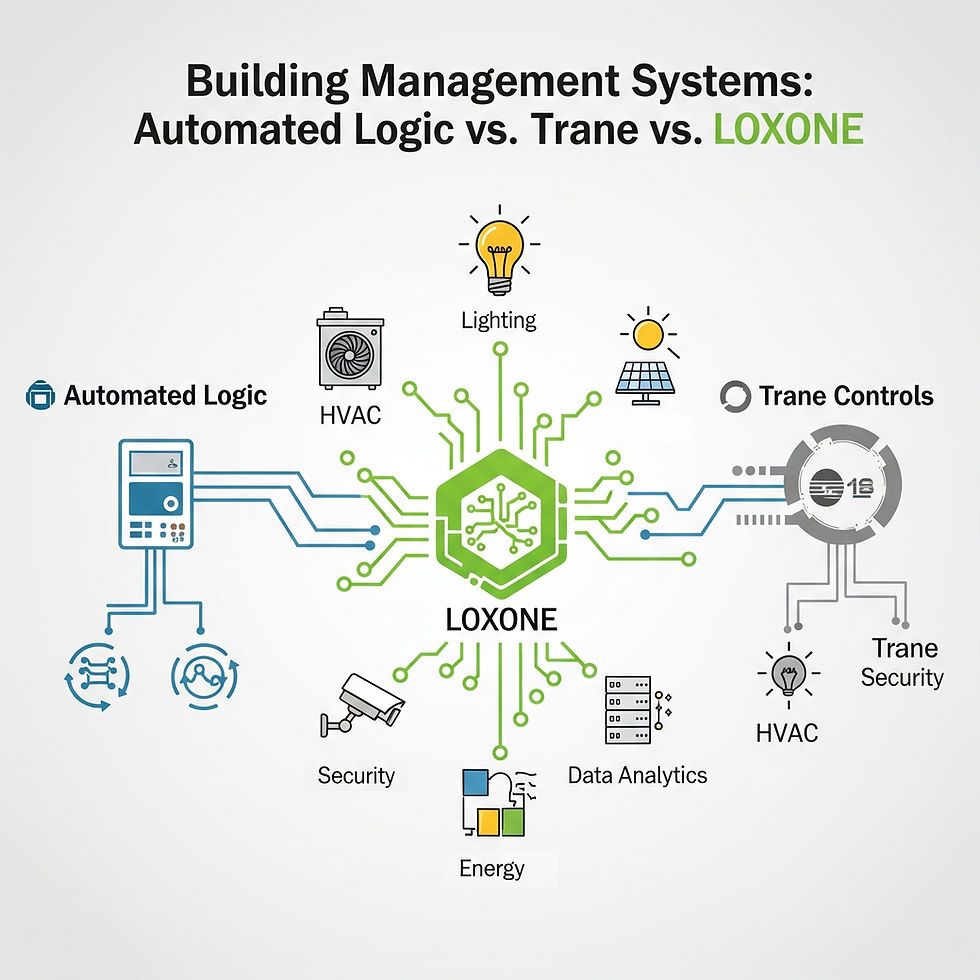
Building Automation for Hotels vs Traditional BMS Platforms
Traditional hotel building management systems were designed primarily to manage infrastructure—HVAC, central plant equipment, and energy monitoring at a building level. While these systems are effective for mechanical control, they typically stop short of addressing the guest room experience.
Modern building automation for hotels requires a different approach. Guest rooms are no longer passive spaces controlled by schedules or keycards alone. They need room-level intelligence that understands occupancy, time of day, and guest behavior. Lighting, climate, shading, audio, and security must work together as one logic-driven system—supporting both guest comfort and hotel operations.
This is where traditional hotel building management systems fall short. They focus on centralized control rather than contextual automation. HVAC may be optimized, but lighting, comfort, and guest interaction often remain disconnected, requiring separate systems or manual intervention.
Platforms like Loxone bridge this gap by combining building automation with guest room intelligence. Instead of separating operations from experience, Loxone allows hotels to manage energy, security, and infrastructure while also automating guest rooms at a behavioral level. Each room operates independently yet follows the same logic across the property, ensuring consistency without complexity.
For modern hotels and resorts, room-level intelligence is no longer optional. Guests expect spaces that feel responsive and effortless, while operators need systems that reduce overhead and scale efficiently. Automation platforms designed for both rooms and operations deliver the flexibility, reliability, and long-term value that legacy BMS platforms were never built to provide.
Fully Automated Hotels Are Built Through Design, Not Devices
A fully automated hotel isn’t created by installing more technology—it’s created by designing how the building behaves. Automation that feels effortless to guests and manageable for operators begins long before hardware is selected or installed.
Successful hotel automation starts at the planning stage, alongside architectural layouts, electrical design, and HVAC coordination. When automation logic is defined early, systems can be integrated cleanly into the building rather than layered on afterward. This approach avoids clutter, reduces complexity, and ensures that technology supports the design instead of competing with it.
The difference lies in software logic, not hardware quantity. Adding more devices often increases maintenance and confusion. Designing automation around behavior—presence, time of day, room use, and operational workflows—creates systems that adapt naturally as conditions change. This logic-driven approach allows hotels to evolve through configuration and software updates rather than costly renovations.
Long-term adaptability is what separates truly automated hotels from technology-heavy properties. When automation is designed as a system, not a collection of devices, hotels gain flexibility to update guest experiences, improve efficiency, and respond to future needs without rebuilding their infrastructure. That’s how modern hotel automation delivers lasting value—quietly, predictably, and at scale.
Choosing Hotel Automation Companies That Design for Hospitality
Selecting the right hotel automation company is less about brands or devices and more about how the automation system is designed. Hospitality environments place very different demands on automation than residential projects—guest turnover, staff workflows, operational reliability, and privacy expectations all change the equation.
Install-first firms typically focus on deploying hardware quickly: thermostats, lighting controls, keycard systems, and apps. While this can check feature boxes, it often results in fragmented behavior, inconsistent guest experiences, and systems that require frequent manual intervention by staff.
Design-first hotel automation companies approach projects differently. They begin by defining how guest rooms, common areas, and back-of-house operations should behave throughout the day—from check-in and housekeeping to sleep, wake-up routines, and energy setbacks. The hotel automation system is then built around those behaviors, not around individual products.
This approach prioritizes clear documentation, system testing, and long-term support. Automation logic is written so staff can rely on predictable outcomes, guests experience comfort without learning controls, and future changes can be handled through software adjustments rather than renovations.
Hospitality automation succeeds when systems are quiet, reliable, and invisible—supporting both guest experience and hotel operations without adding complexity. Choosing a company that understands this difference is often the deciding factor between a hotel that feels automated and one that truly operates intelligently.


Comments